Monthly Rent, Management Fees, and Labor Costs: How Card Payment Services Are Changing Cash Flow for Korean Renters and Business Owners
Managing recurring expenses like rent, building management fees, and staff wages has long required keeping enough cash on hand at exactly the right moment. For many renters and small business operators in Korea, that timing pressure creates real stress. A growing category of payment intermediary services now lets people settle these obligations by credit or debit card instead, giving them more flexibility over when money actually leaves their account. This article explains how each of these services works, who benefits most, and what to watch out for before signing up.
Why Paying Fixed Recurring Costs in Cash Is a Problem
Most landlords and property managers in Korea still expect rent and building fees to arrive as a direct bank transfer on a fixed date each month. Employers paying part-time workers or contractors face a similar constraint: wages are due on payday regardless of whether client invoices have cleared. When income arrives late or in uneven amounts, even a modest shortfall can trigger late fees, strained relationships, or short-term borrowing at high interest rates. The core appeal of card-based payment services is simple — they let you use available credit to meet an obligation today while settling that credit balance on your card’s billing cycle, which may be weeks away.
How Monthly Rent Card Payment Works
Rent card payment services act as a bridge between a tenant and a landlord who does not accept cards. The tenant pays the service provider by credit or debit card, and the provider transfers the equivalent cash amount to the landlord’s bank account, usually within one to two business days. From the landlord’s perspective, nothing changes — they still receive a bank transfer as expected. From the tenant’s perspective, the payment is treated as a card purchase, which means it falls under the card’s billing cycle and may also accumulate reward points or cashback depending on the card terms. This approach is particularly useful for tenants whose salaries arrive after their rent due date, or for those managing multiple properties who want a single consolidated statement.
Understanding Management Fee Card Payment
Building management fees for apartments and officetels are issued monthly and cover shared costs such as elevator maintenance, cleaning, security, and utility infrastructure. Traditionally paid by bank transfer or automatic debit, these fees can now be settled through 관리비카드결제 platforms that process the payment on the resident’s behalf. The resident pays the platform by card; the platform remits the amount to the management office. For residents who are already stretching their budget across rent, utilities, and living expenses, shifting management fees onto a credit card’s billing cycle can provide meaningful breathing room without requiring a loan.
Key Benefits of Management Fee Card Settlement
- Smooths out monthly cash flow by aligning payment timing with your card billing date rather than the management office’s due date.
- Allows accumulation of card reward points on an expense that previously generated no rewards at all.
- Provides a digital paper trail through card statements, making expense tracking and tax documentation easier for self-employed residents.
Labor Cost Card Payment for Business Operators
For small business owners, the labor cost card payment service addresses one of the most time-sensitive obligations a company faces. Wages for part-time staff, freelancers, and service contractors must be paid on schedule, but client receivables do not always cooperate with that schedule. By routing wage payments through a card payment intermediary, the business owner can use available credit to fund payroll today and repay the card balance when cash flow recovers. This does not change the worker’s experience — they still receive a direct bank transfer — but it gives the employer a short-term liquidity buffer without resorting to high-interest emergency loans.
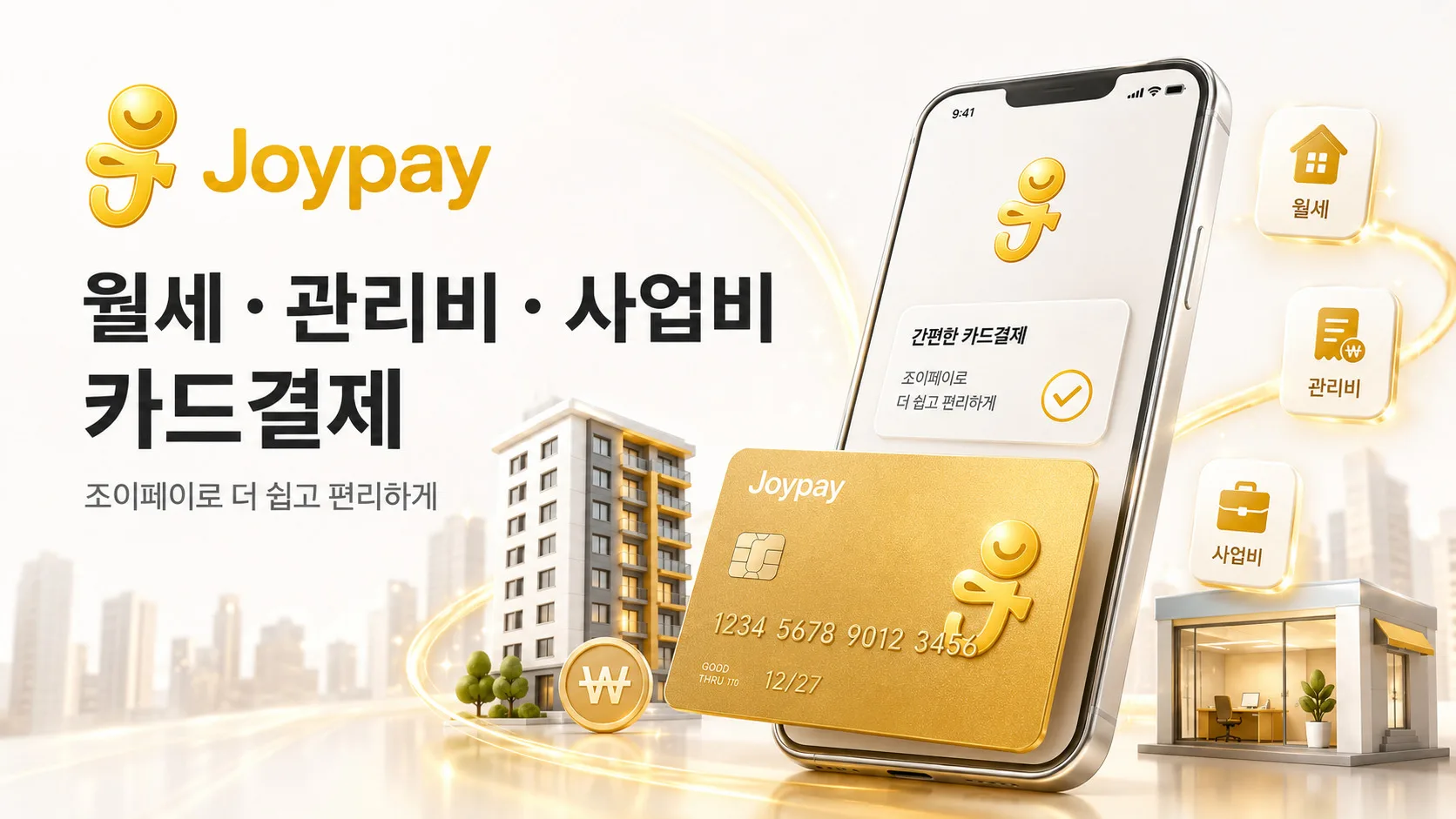
Side-by-Side Comparison of the Three Services
| Service Type | Who Uses It | Recipient of Funds | Primary Benefit |
|---|---|---|---|
| Rent Card Payment | Tenants renting residential or commercial space | Landlord via bank transfer | Defers cash outflow; earns card rewards |
| Management Fee Card Payment | Apartment and officetel residents | Building management office | Flexible timing; consolidated statements |
| Labor Cost Card Payment | Small business owners and sole proprietors | Workers and contractors | Bridges payroll gaps during slow revenue periods |
Things to Consider Before Using These Services
Card payment intermediary services charge a processing fee, typically ranging from around one to three percent of the transaction amount. Before enrolling, it is worth calculating whether the cash flow benefit outweighs that cost in your specific situation. If your card offers strong cashback or points on general purchases, those rewards can offset part of the fee. It is also worth confirming that your card issuer does not classify these transactions as cash advances, which carry higher interest rates and no grace period. Reading the terms of the specific platform carefully and comparing fee structures across providers will help you make a well-informed choice.
Card-based payment services for rent, management fees, and labor costs represent a practical evolution in how individuals and small businesses handle fixed recurring obligations. They do not eliminate the underlying cost, but they give users meaningful control over timing — and in cash flow management, timing is often everything. If you are regularly caught between a payment due date and an income arrival date, exploring one of these services could be a straightforward way to reduce that friction without taking on formal debt.